Naxqelvi
Luma Set
Luma Set
Couldn't load pickup availability
- Problem Statement
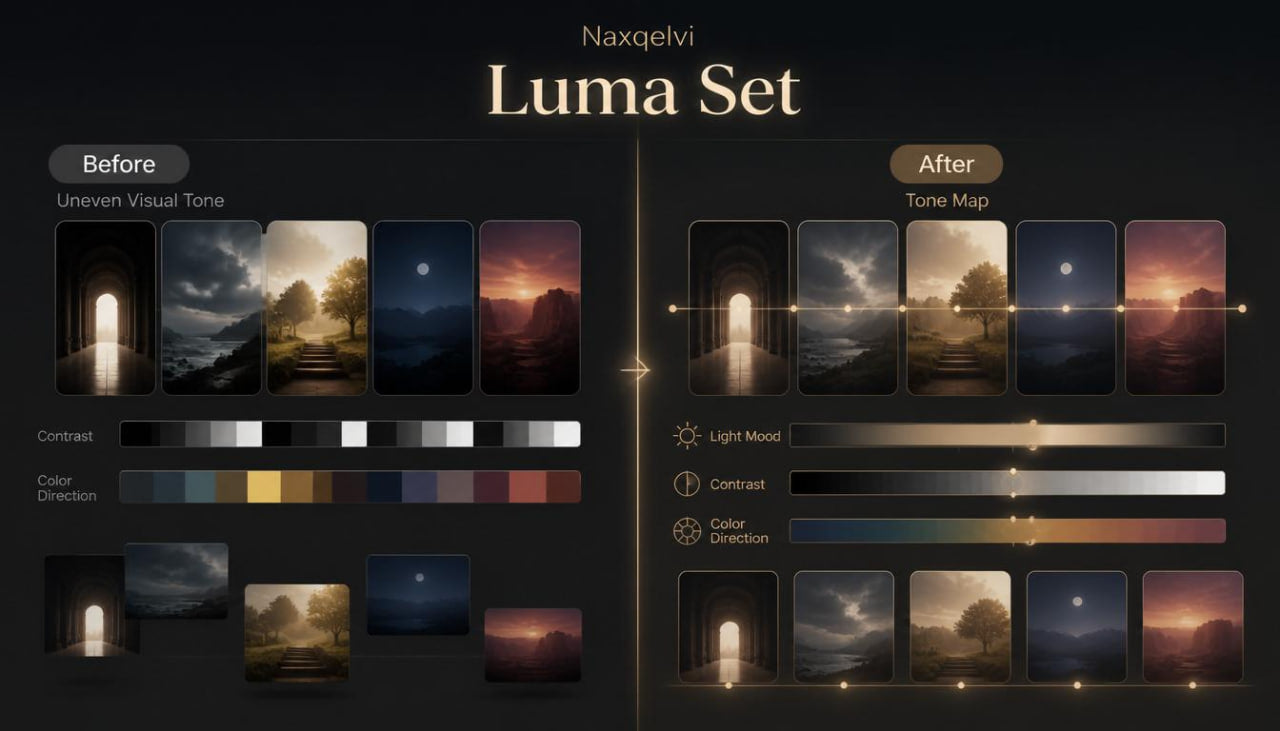
Many learners arrange clips in a clear order but still feel that the full project lacks visual unity. A sequence can look uneven when brightness changes too sharply, when color mood shifts without reason, or when one scene feels visually disconnected from the next. Learners may also find it difficult to describe what feels wrong because the issue is not always the cut itself. Sometimes the problem comes from tone, light balance, or the way visual atmosphere changes between scenes. Luma Set was created to help learners study these softer visual details with a structured and practical approach.
- Solution
Luma Set introduces editing materials focused on light, tone, color mood, and visual consistency. The course explains how brightness, shadow, contrast, and color direction can influence the viewer’s experience of a sequence. Learners study how visual mood works together with pacing, frame order, and scene transitions. The materials include guided notes, comparison tasks, review tables, and planning resources for checking visual tone across a timeline. This tier helps learners build a calmer review process for noticing where a project feels visually connected and where it may need adjustment.
- What’s Inside
Luma Set includes a detailed group of Naxqelvi materials built around the visual atmosphere of an edit. The tier begins with an orientation section that explains how light and color can support the structure of a sequence. Learners are introduced to the idea that editing is not only about choosing where clips begin and end. It also involves noticing how clips look beside each other and whether their visual tone fits the intended direction of the project.
The first main section focuses on light mood. Learners study how bright scenes, soft scenes, shadow-heavy moments, and mixed lighting can influence the feeling of a sequence. This section explains how sudden changes in brightness can affect the viewer’s attention. It also encourages learners to take simple notes before arranging clips, especially when working with material that changes from one setting to another.
The second section introduces contrast awareness. Contrast is explained as the relationship between lighter and darker parts of a frame. Learners review how strong contrast can create a sharper visual feeling, while softer contrast may create a calmer tone. The materials do not push one style as better than another. Instead, they show how contrast should be reviewed in connection with the project’s rhythm, subject, and scene order.
The third section explores color mood. Learners study how warm, cool, muted, bright, and neutral color directions can influence atmosphere. This part explains how color can guide the emotional tone of a sequence without needing dramatic wording or heavy visual changes. Learners compare short scene descriptions and note how the mood changes when color direction shifts.
The fourth section covers visual continuity between scenes. This part helps learners notice when one clip feels separated from the next because the tone changes too strongly. It explains how to review brightness, color direction, contrast, and subject visibility from clip to clip. Learners are encouraged to ask whether the visual shift feels intentional or distracting.
The fifth section introduces mood mapping. This is a planning method where learners write down the intended tone for each part of a project before making detailed edits. A mood map may include notes such as calm opening, brighter middle section, softer closing, cooler scene bridge, or reduced contrast during a quiet moment. This gives the learner a simple way to connect visual tone with timeline structure.
Luma Set includes a visual tone worksheet. The worksheet has spaces for scene name, brightness notes, color direction, contrast level, visual mood, transition notes, and review comments. It can be used while studying sample material or while reviewing a learner’s own practice edit. The worksheet encourages observation before adjustment.
A scene comparison task is also included. Learners review two short sequence outlines and describe how light mood affects the viewing flow. They compare how a bright opening changes the feeling of a project compared with a muted opening. They also study how color direction can make a transition feel smoother or more noticeable.
The tier includes a review table for checking visual consistency across a timeline. This table asks learners to review whether the first scene fits the later scenes, whether color shifts are intentional, whether brightness changes distract from the subject, and whether the closing visual tone feels connected to the opening. The table is written for repeated use and can support practical review habits.
Luma Set also includes a glossary of visual tone terms. It explains light mood, contrast, color direction, muted tone, warm tone, cool tone, visual continuity, brightness shift, atmosphere note, and mood map. Each term is written in plain language so learners can use the glossary while reviewing the course materials.
The final part of the tier is a reflection section. Learners write down what they noticed about light, color, and tone after completing the study tasks. They can note which scenes felt connected, where the visual mood changed too sharply, and what they would adjust in another version. The reflection page helps learners connect observation with practice.
- Who Is This For?
Luma Set is for learners who already understand basic timeline order and want to study the visual tone of editing in more detail. It is suitable for people who notice that their projects may be arranged clearly but still feel visually uneven. This tier is helpful for learners who want to understand how light, contrast, and color mood can affect scene flow.
The course is also intended for learners who prefer structured written materials, worksheets, and review prompts. It does not require advanced visual design knowledge. Each idea is explained through editing situations, so learners can connect visual tone with practical timeline decisions.
Luma Set may also suit learners who want to create more consistent visual sequences for personal, study, or creative projects. The focus is on careful observation, clear notes, and practical review. Learners are not pushed toward one visual style. Instead, they are guided to understand how visual choices work inside a sequence.
- What You’ll Learn
- How light mood can affect the feeling of a sequence
- How brightness changes can guide or distract viewer attention
- How contrast influences visual tone
- How warm, cool, muted, and neutral color directions can shape atmosphere
- How to review whether two scenes feel visually connected
- How to create a simple mood map before editing
- How to use a visual tone worksheet during practice
- How to compare different light moods in short sequence outlines
- How to identify color shifts that may feel distracting
- How to connect visual tone with pacing and scene order
- How to review a timeline for brightness, contrast, and color consistency
- How to write useful notes about visual atmosphere
- How to decide whether a visual shift feels intentional
- How to create a calmer review habit for light and color choices
- 30-Day Refund Terms
Luma Set includes a 30-day refund request period according to the Naxqelvi store policy. Customers may submit a refund request within 30 days of purchase when the request follows the stated order conditions and refund rules.
Self-paced learning overview
- 📁 Digital file available after purchase
- 📚 Long-term availability
- 🔒 Secure checkout
- 🗓️ Content updated in 2026
What format are the Naxqelvi course materials provided in?
What format are the Naxqelvi course materials provided in?
Naxqelvi course materials are prepared as digital learning resources for self-paced study. They may include written modules, editing notes, planning tables, recap sections, practice tasks, and project-based examples.
Can I study the materials at my own pace?
Can I study the materials at my own pace?
Yes. The materials are created for gradual study, so learners can read, review, pause, return to earlier topics, and repeat practical tasks when needed.
Do I need previous editing knowledge before starting?
Do I need previous editing knowledge before starting?
No previous editing background is required for the starting tiers. The first materials introduce core ideas such as timeline order, scene rhythm, visual flow, transitions, and basic project organization.
Share